


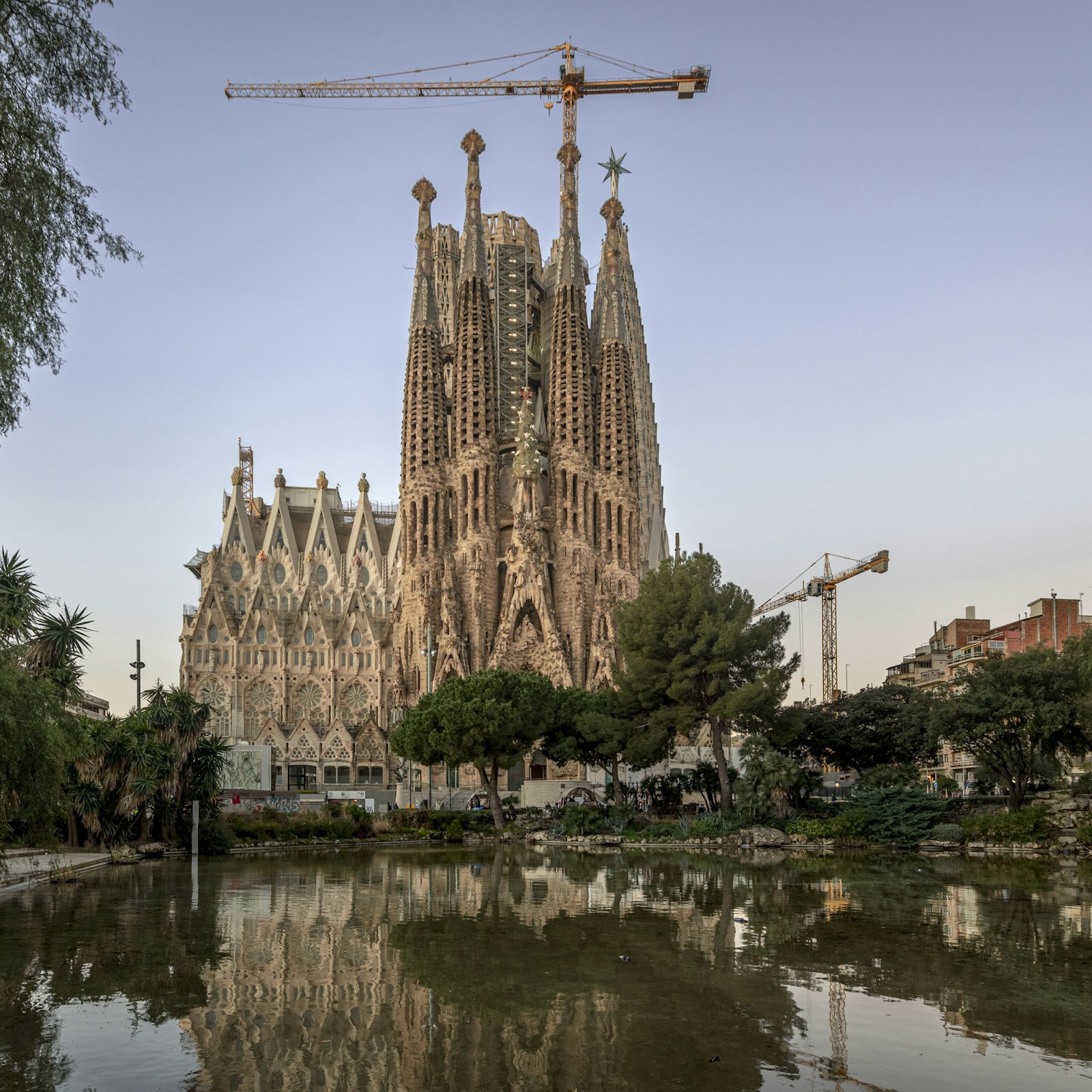
Sagrada Familia: Fast Track Entry Ticket
Enjoy Gaudi's unfinished masterpiece, The Sagrada Familia
- Sagrada Familia: Fast Track Entry Ticket
- Downloadable Sagrada Familia App with Audio Guide


UNESCO World Heritage Sites in Barcelona
Barcelona is home to several UNESCO World Heritage Sites, many of which are connected the late Antoni Gaudí and offer a glimpse into his extraordinary architectural achievements, including probably the city's most famous monument, the Sagrada Famila.
{{ticket-block-triple}}
The Sagrada Familia - See Ticket Options
The Sagrada Familia is the unfinished but iconic symbol in the Barcelona skyline. Officially named the ‘Basilica and Expiatory Church of the Holy Family’, it was designated a UNESCO World Heritage Site in 2005 for its Nativity façade and crypt and as part of the "Works of Antoni Gaudí." listing. Construction began in 1882 and it was due to be completed in 2026, however, due to Covid and now rumoured funding issues, no updated completion date has been published. Gaudí, who devoted the latter part of his life exclusively to this project, tragically passed away in 1926, so will never see his masterpiece complete. However, plenty of people do, with around 20 million people visiting the area each year just to see it from the outside alone, so his project is most definitely a success!
Park Güell - See Ticket Options
Another Antoni Gaudí design and originally intended to be a residential estate for Barcelona's elite, Park Güell was transformed into a public park after it became financially unfeasible. Originally commissioned by Eusebi Güell, the park opened to the public in 1926 and is a firm favourite in the city and again recognized as a UNESCO World Heritage Site in 1984 under the "Works of Antoni Gaudí" listing.
Park Güell is divided into two sections:
- The Monumental Zone: Spanning 12 hectares, the area includes the famous Dragon Stairway, Porter's Lodge Pavilion, Hypostyle Room, Greek Theatre, Austria Gardens and more. Tickets are required for access.
- The Forest Zone: Covering 7 hectares, this area is free to the public.
Casa Batlló - See Ticket Options
Casa Batlló, (another Gaudi design!) was also designated as a UNESCO World Heritage status in 2005 as part of the "Works of Antoni Gaudí" listing. Originally constructed by Emilio Sala Cortes, Gaudí's university professor, it was remodelled by Gaudí between 1904 and 1906 after being purchased by Josep Batlló y Casanovas (where its name comes from). Sold by the Batlló family and now owned by the Bernat family (since the 1990s), Casa Batlló was opened to the public in 1995 and is now one of the city's most popular attractions.
Casa Milà (La Pedrera) - See Ticket Options
Casa Milà, or commonly known as ‘La Pedrera’, due to its quarry-like appearance, is another Gaudi property and was added to the UNESCO World Heritage list in 1984. Commissioned by Pere Milà (where the name comes from) and his wife, Roser Segimon, Gaudí designed the building between 1906 and 1912. After years of neglect, it was restored and opened to the public in 1996. Found on the fashionable 'Passeig de Gràcia', Casa Milà is another of the city's most popular attractions.
Palau de la Música Catalana - See Ticket Options
Designed by 'Lluís Domènech i Montaner' and completed in 1908, the Palau de la Música Catalana is celebrated for its famous stained glass windows and ornate architecture. The concert hall is in the Barri Gotic (Gothic Quarter) of the city and was listed as a UNESCO World Heritage Site in 1997. Having undergone a sensitive refurbishment in the 1980s, preserving its original charm.
Palau Güell (Güell Palace) - See Ticket Options
One of Gaudí’s early masterpieces, Palau Güell was built between 1886 and 1890 for Eusebi Güell (of Park Güell). Palau Güell was recognised as a UNESCO World Heritage Site in 1984, and it served as a family residence for the Güell’s as well as being a venue for social events. Despite being lesser-known, Palau Güell is a must-visit for those interested in Gaudí's work.
Recinte Modernista de Sant Pau Hospital - See Ticket Options
Another design by 'Lluis Domènech i Montaner' (the same architect that designed the Palau de la Música Catalana mentioned above), the property was constructed on the site of a mediaeval hospital. Sant Pau Hospital was revolutionary for its time. Its design, which features 16 pavilions and underground tunnels, aimed to heal patients’ spirits through beauty. It was commissioned as part of a will from a wealthy benefactor. The Sant Pau Hospital was awarded UNESCO World Heritage status in 1997, and was operational as a hospital until 2009, but due to it outgrowing the site, had to be moved. Its known by several names including:
- Recinta Modernista
- Sant Pau Hospital
- Sant Pau Art Nouveau
- Hospital dela Santa Creu i Sant Pau
Casa Vicens - See Ticket Options
Casa Vicens is one of Gaudí's early works having been constructed between 1883 and 1885 for Manel Vicens i Montaner. The building reflects Gaudí’s orientalist period and was designated a UNESCO World Heritage Site in 2005. Now owned by MoraBanc, an Andorran bank, it has been restored and is open to the public to enjoy.
Popular Tickets


Popular Attractions
Fun Facts About UNESCO Sites in Barcelona
- Sagrada Família's Ongoing Construction: The Basilica of the Sagrada Família which was designed by the renowned architect Antoni Gaudí, is one of the most famous UNESCO World Heritage Sites in Spain let alone just Barcelona. Despite construction starting in 1882, it still remains unfinished. Gaudí dedicated the latter part of his life to this project. It was anticipated to be completed by 2026, however delays due to Covid-19 and now believed funding issues have delayed the completion with no expected date currently being given.
- Park Güell's Colourful Mosaic Work: Park Güell which is another of Gaudí's masterpieces and a UNESCO World Heritage Site, features vibrant mosaic tile work known as "trencadís." The technique uses broken ceramic pieces to create intricate and colourful patterns. The park’s famous serpentine bench, which is covered in trencadís, offers amazing views of the city and is a favourite spot for visitors.
- Palau de la Música Catalana's Stained Glass: The Palau de la Música Catalana is a concert hall designed by architect Lluís Domènech i Montaner. The concert hall is celebrated for its stunning stained glass. The central skylight, which resembles a giant stained-glass sun, bathes the auditorium in natural light which creates a unique and enchanting atmosphere during performances!
- Hospital de Sant Pau's Hidden Tunnels: The Hospital de Sant Pau which was also designed by Lluís Domènech iMontaner, is not only architecturally impressive but also practical. The hospital complex includes a network of underground tunnels that connect the various pavilions. The tunnels were used to transport patients and medical supplies discreetly, enhancing the functionality of this stunning Art Nouveau structure which is now a UNESCO World Heritage Site!
Useful Information About Barcelona UNESCO World Heritage Sites
Sagrada Familia Tickets
Park Güell Tickets
Casa Batlló Tickets
Casa Milà - La Pedrera Tickets
Palau de la Música Catalana Tickets
Palau Güell (Güell Palace) Tickets
Recinte Modernista de Sant Pau Tickets
Casa Vicens Tickets
Locations of some of the UNESCO Sites in Barcelona


